The Lamborghini top speed legacy is a testament to the brand’s relentless pursuit of aerodynamic supremacy and mechanical excellence. From the Miura’s groundbreaking performance in the 1960s to the Aventador’s thunderous acceleration in the modern era, the Lamborghini top speed benchmarks have consistently pushed the boundaries of what’s possible on four wheels. These records are not mere numbers—they are declarations of intent, forged in wind tunnels and proven on asphalt.
Each model that contributes to the Lamborghini top speed narrative embodies a unique fusion of design, engineering, and ambition. Whether on closed circuits or salt flats, the marque’s obsession with velocity remains undiminished, captivating enthusiasts and engineers alike.
The Miura: Birth of the Supercar
Introduced in 1966, the Miura P400 shattered conventions with its mid-engine layout and sleek silhouette. Capable of reaching speeds over 170 mph, it redefined the supercar archetype. Its V12 engine, nestled transversely behind the cockpit, delivered a symphonic blend of power and finesse.
The Miura’s top speed was not just a technical achievement—it was a cultural milestone. It signaled the arrival of a new era, where performance was as much about style as it was about substance. Its influence echoes through every Lamborghini that followed.
Countach and Diablo: The Top Speed Evolution
The Countach, unveiled in the 1970s, took the Miura’s legacy and amplified it. With its wedge-shaped design and scissor doors, it became an icon of excess and innovation. Its LP5000 QV variant boasted a top speed nearing 185 mph, thanks to a 5.2-liter V12 and improved aerodynamics.
The Diablo, launched in the early 1990s, marked Lamborghini’s entry into the 200 mph club. Its 5.7-liter engine and all-wheel-drive system enabled it to reach 202 mph—a figure that placed it among the fastest production cars of its time. These models weren’t just fast; they were audacious statements of engineering prowess.
Murciélago and Gallardo: Precision Meets Power
The Murciélago LP670-4 SV, a track-focused iteration of the flagship model, achieved a blistering top speed of 212 mph. Its carbon-fiber enhancements and aerodynamic refinements allowed it to slice through air with surgical precision. Meanwhile, the Gallardo, Lamborghini’s compact offering, delivered speeds up to 202 mph in its Superleggera form—proving that agility and velocity could coexist.
These vehicles demonstrated the brand’s ability to balance brute force with technical sophistication. Their performance metrics were matched by handling dynamics that made them formidable on both straights and corners.
Aventador Series: The Apex Predator
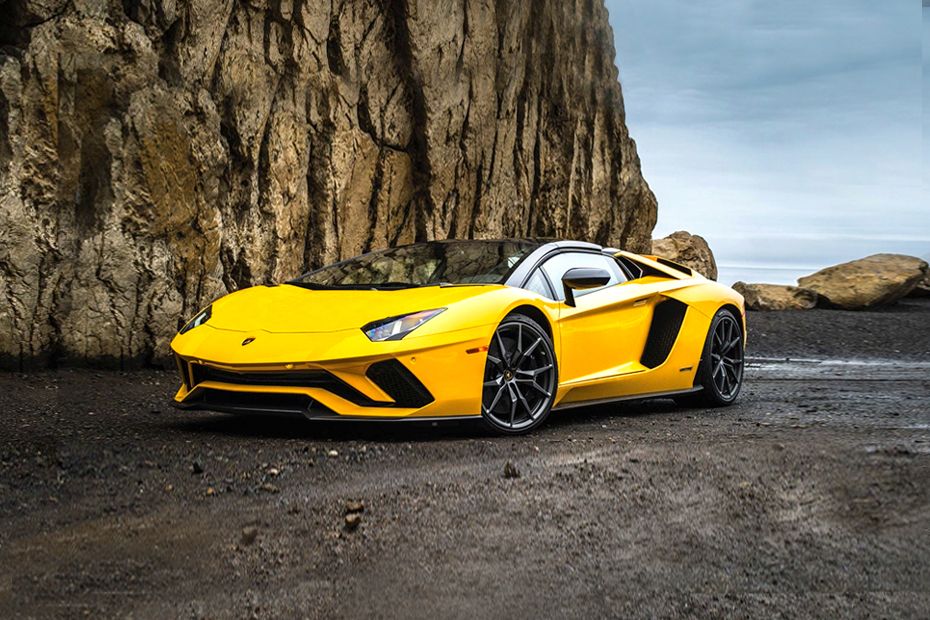
The Aventador SVJ, equipped with a naturally aspirated 6.5-liter V12, reached a staggering 217 mph. Its active aerodynamics system, dubbed ALA (Aerodinamica Lamborghini Attiva), adjusted airflow in real time to optimize downforce and drag. This technological leap allowed the SVJ to set lap records while maintaining top-tier velocity.
Its acceleration was equally impressive—0 to 100 km/h in under 2.8 seconds. The Aventador series exemplifies Lamborghini’s commitment to evolving its performance envelope without compromising its visceral appeal.
Huracán Variants: Top Speed with Finesse
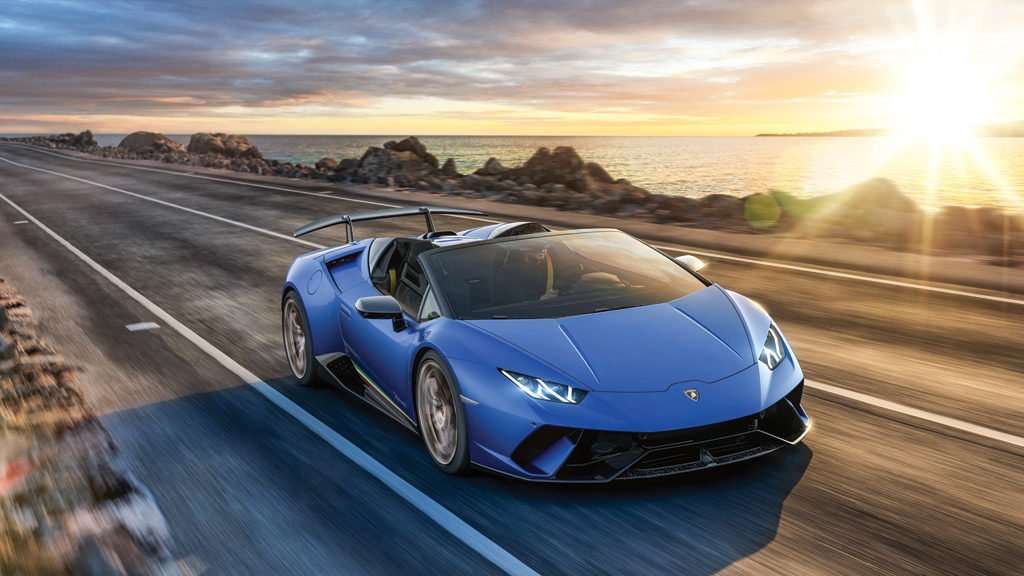
The Huracán Performante, with its lightweight construction and advanced aerodynamics, achieved a top speed of 202 mph. Its V10 engine, paired with a dual-clutch transmission, delivered seamless power delivery and razor-sharp responsiveness.
The EVO variant introduced predictive handling systems, enhancing stability at high speeds. These innovations ensured that the Huracán remained not only fast but also controllable—an essential trait for real-world driving scenarios.
Concept Cars and Top Speed Experimental Records
Beyond production models, Lamborghini has explored velocity through concept vehicles. The Terzo Millennio, a futuristic electric prototype, hints at a new dimension of speed—one driven by instant torque and regenerative systems. While not yet tested for top speed, its design suggests capabilities that could rival or surpass combustion-powered predecessors.
The Essenza SCV12, a track-only hypercar, boasts over 830 horsepower and aerodynamics derived from GT racing. Though its top speed remains unofficial, early tests indicate performance figures that challenge even the Aventador SVJ.
The Role of Aerodynamics and Materials
Speed is not solely a function of horsepower. Lamborghini’s use of carbon fiber, titanium, and advanced composites reduces weight while enhancing rigidity. Active aerodynamic systems manipulate airflow to minimize drag and maximize stability.
Wind tunnel testing and computational fluid dynamics play pivotal roles in shaping each model. From splitters to diffusers, every element is calibrated to serve the singular goal of velocity. These refinements ensure that Lamborghini’s speed records are not brute-force achievements, but calculated triumphs of engineering.
Future Trajectory and Electrification
As the automotive industry pivots toward electrification, Lamborghini is poised to redefine speed once again. Hybrid systems, solid-state batteries, and AI-assisted dynamics will usher in a new era of performance. The upcoming Revuelto, with its plug-in hybrid V12, promises acceleration and top speed figures that rival its predecessors while embracing sustainability.
This evolution reflects a broader shift—where speed is no longer measured solely in miles per hour, but in efficiency, responsiveness, and adaptability. Lamborghini’s future records will be set not just on racetracks, but in the realm of technological innovation.

.jpg?k=1924235ce9 "Honda Civic Type R")